

Training game
Beginner Running Training
Steer through Doug’s obstacle course over the water. Cross increasingly long and difficult obstacles to earn Running XP, with more obstacle types joining the course as you unlock new parts.
Doug’s Crash Course is the Beginner Running training game.
Unlocking it
Learn Running from 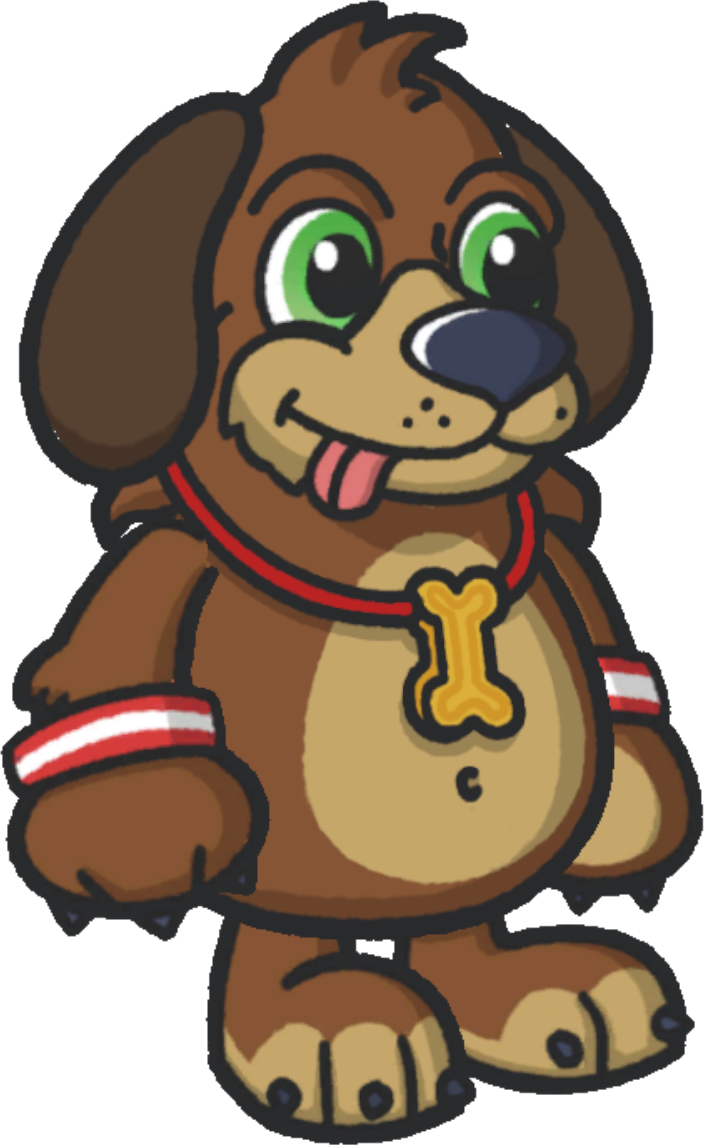 Doug the Dog in
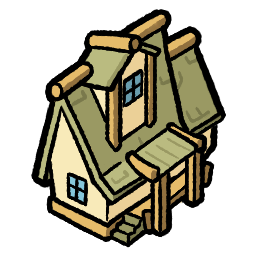 The Flock Village during the opening tutorial. Your starting duck is enough: the flock requirement is 1 duck. Doug introduces the
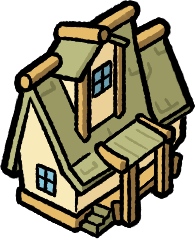 Training Centre, where you can start Beginner Running training.
How to play
- Use the movement controls to move forwards, backwards and sideways along the platforms. On mobile, use the on-screen analogue control.
- Stay on the course and steer around hazards. Falling into the water ends the attempt; some obstacles can also knock you out.
- Look ahead before entering each obstacle. Use the solid connecting platforms to line up for the next crossing.
Training parts
New parts unlock every ten Running levels. Each part keeps the earlier obstacle types and adds the ones listed below.
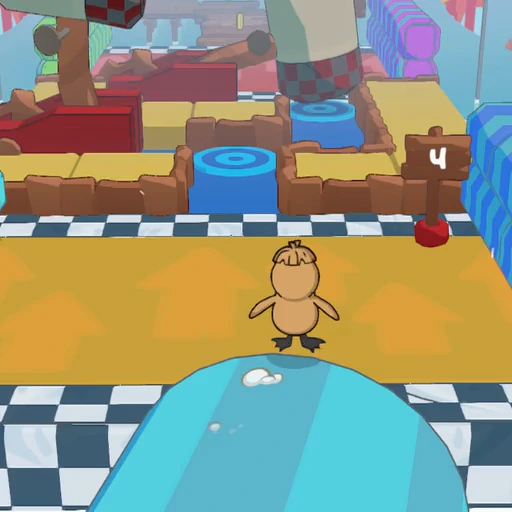
Part 1: Obstacle course
Bridges, swinging hammers, swinging balls and rollers form the starting obstacle selection.
Tip: Follow each bend in the wooden path rather than cutting across the water. Time your run past swinging hammers and balls, and run around the roller’s protruding pegs.
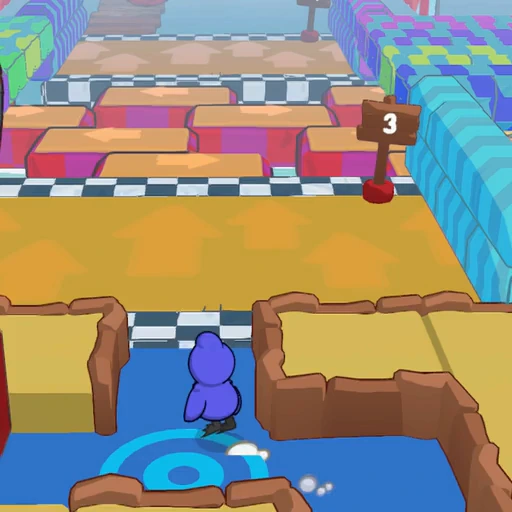
Part 2: Revolving Relay and Logs
Adds rotating platforms and drifting platforms.
Tip: Use the centre of a rotating platform to line up with the next connecting bridge. On drifting platforms, watch the sideways arrows and cross to the next row when the platforms line up.
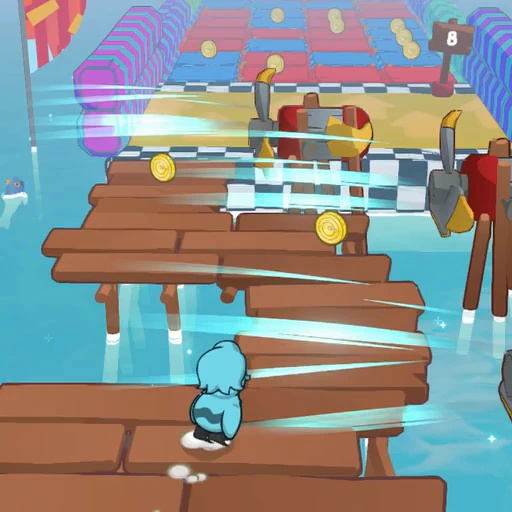
Part 3: Cyclones and Trapdoors
Adds fans and trapdoors.
Tip: Run against the fans’ sideways push to stay on the path. At trapdoors, watch the opening cycle and cross closed, flat doors; neither colour is always safe.
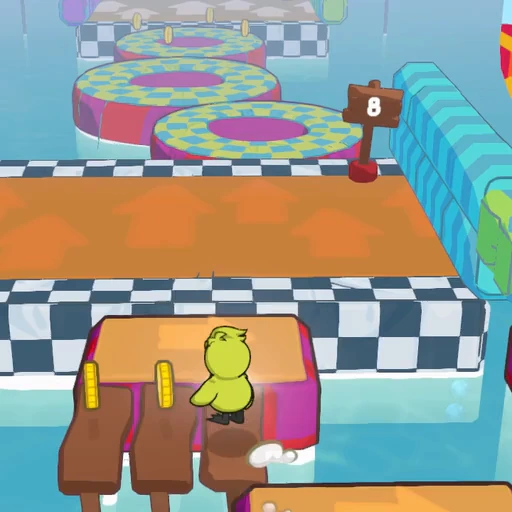
Part 4: Doughnuts and Cubes
Adds rotating doughnuts and shifting floor blocks.
Tip: Run around each doughnut’s open centre. For the shifting blocks, read the direction arrows and cross when neighbouring blocks meet.
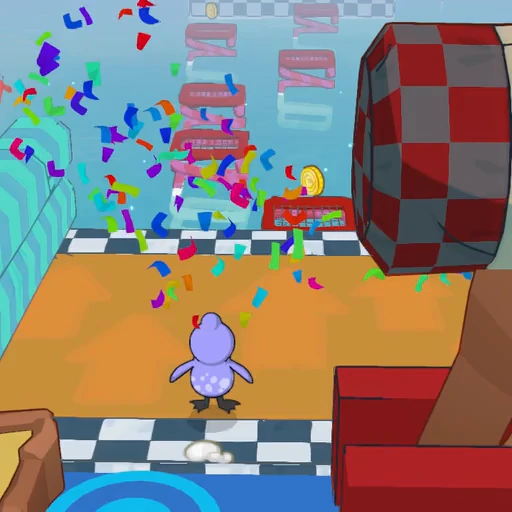
Part 5: Bounce Blitz
Adds trampolines; all earlier obstacle types remain in the course.
Tip: Trampolines bounce you automatically. Steer while airborne towards the next pad, allowing for its sideways movement before you land.
Training game chests
A chest appears on the connecting stretch after every fifth obstacle. Run close to it to collect the reward. See 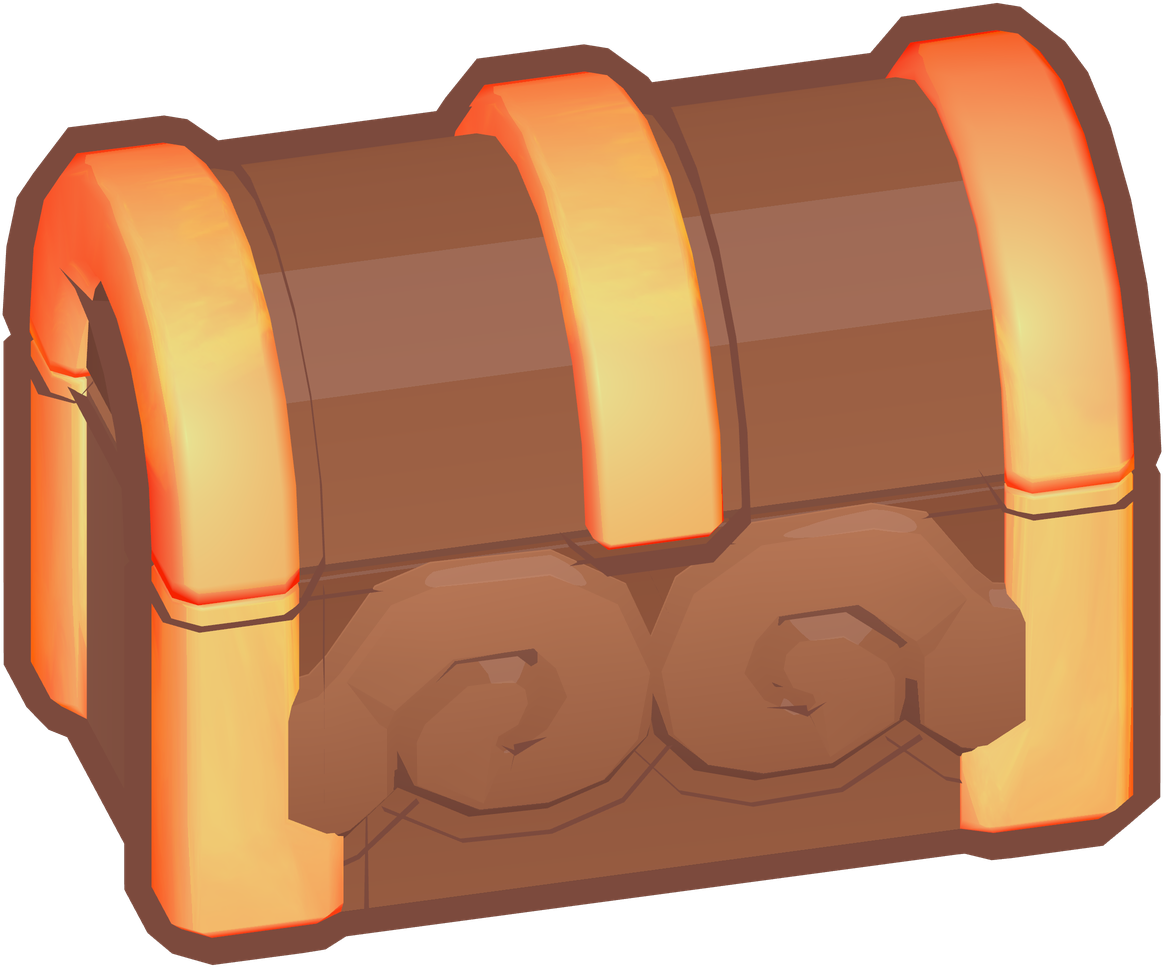 Training Game Chests for the reward quantities and drop rates.
Distance, XP and difficulty
Your score measures how far forwards you travel. Running XP is awarded at checkpoints after obstacles, and the reward takes the obstacle’s length into account: a longer obstacle gives more XP than a shorter one of the same type and difficulty. Simply waiting on a platform does not earn distance or checkpoint XP.
- The course becomes harder the further you travel in an attempt. Obstacles can become longer, narrower or faster, depending on their type. A higher Running level also raises the starting difficulty.
- Unlocking a new part adds obstacle types to the existing selection. Earlier obstacles still appear, so learn each type rather than expecting one fixed sequence.
Bridges
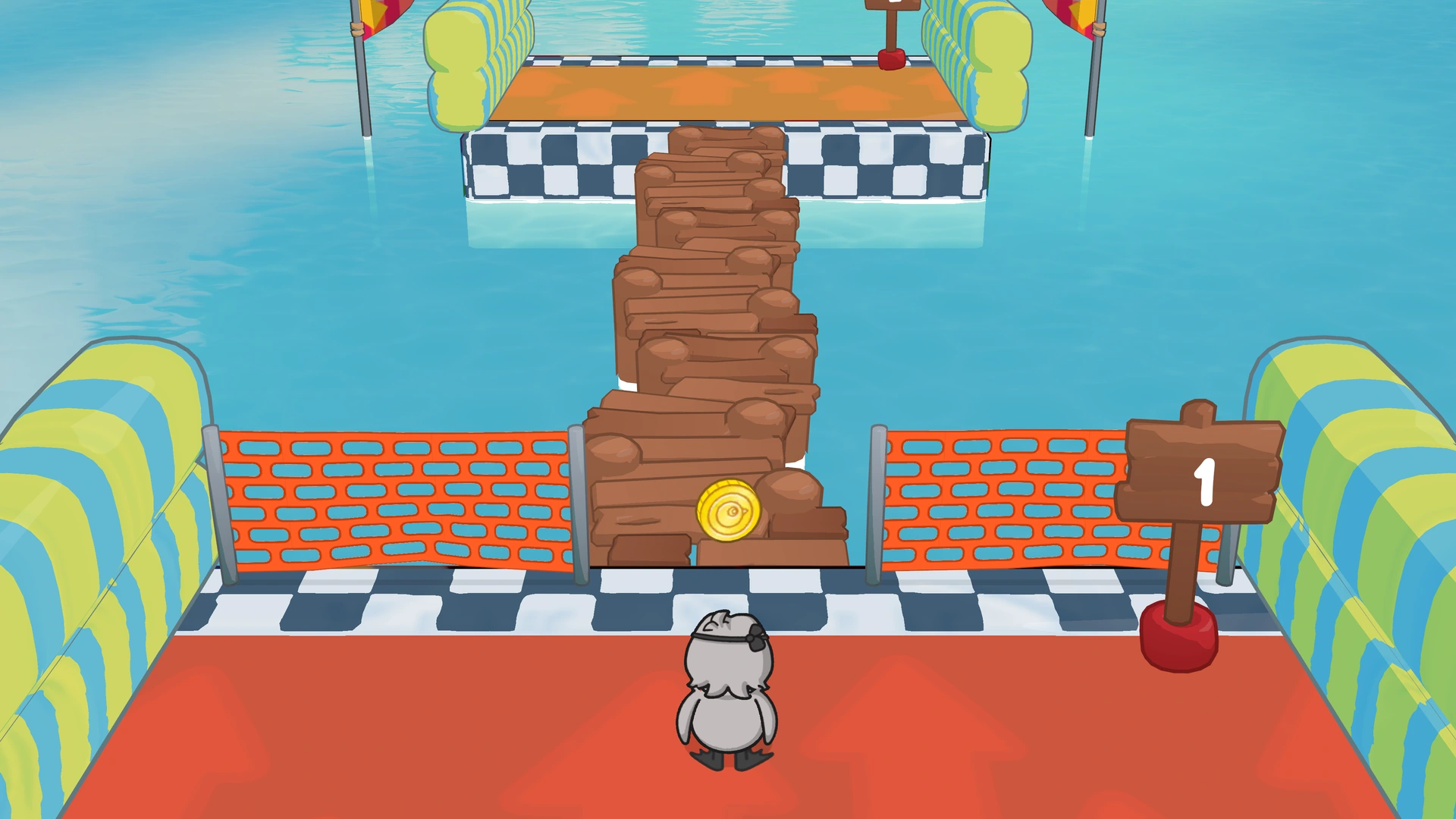
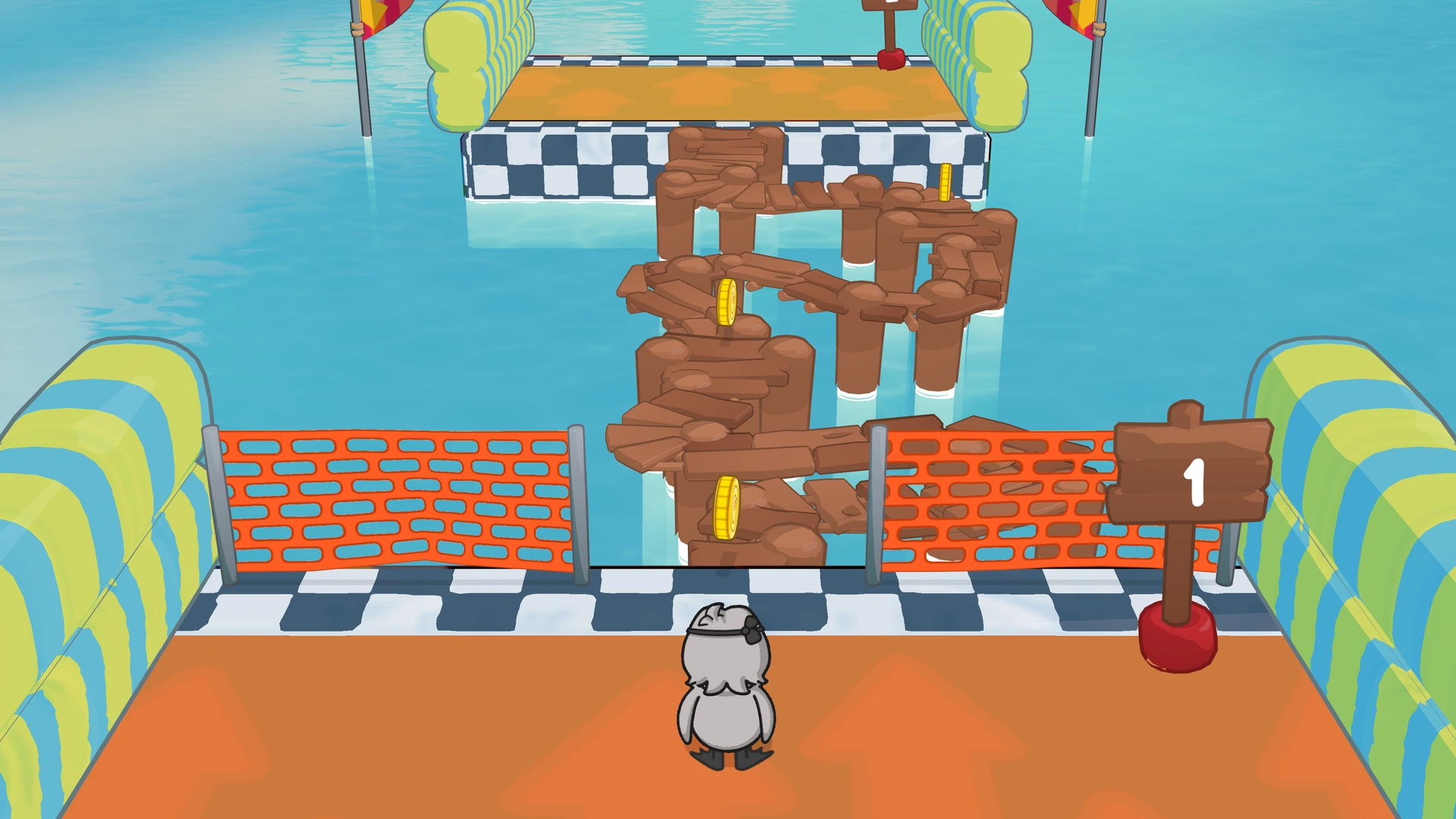
Available from Part 1. Follow a connected wooden route over the water. Early bridges are straightforward; later versions use longer, thinner and more winding routes.
- Aim along the plank rather than directly towards the exit: cutting across the inside of a bend can take you into the water.
- Make small steering corrections on narrow sections. Line up with the next bend while you still have room to turn.
Swinging hammers
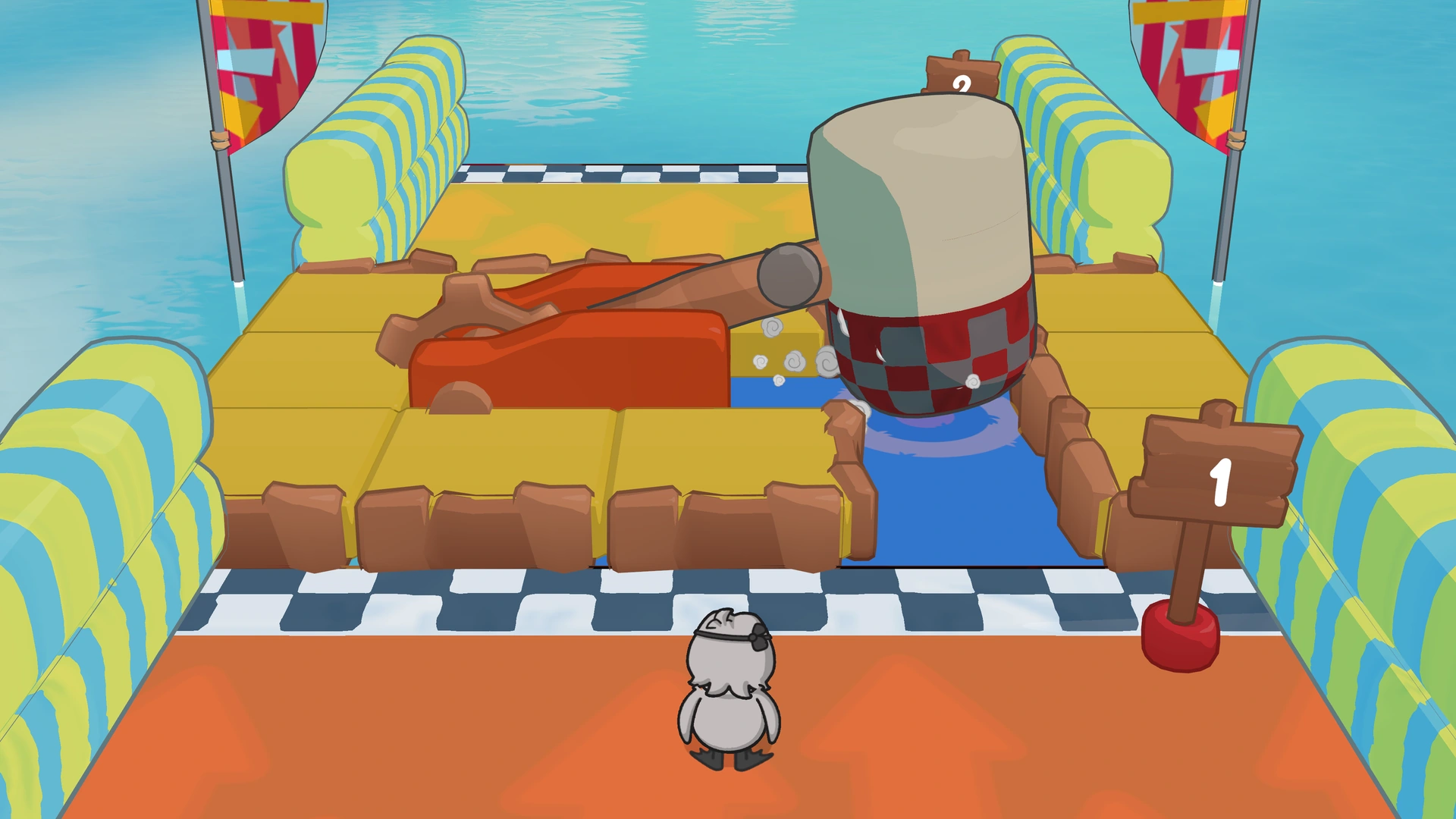
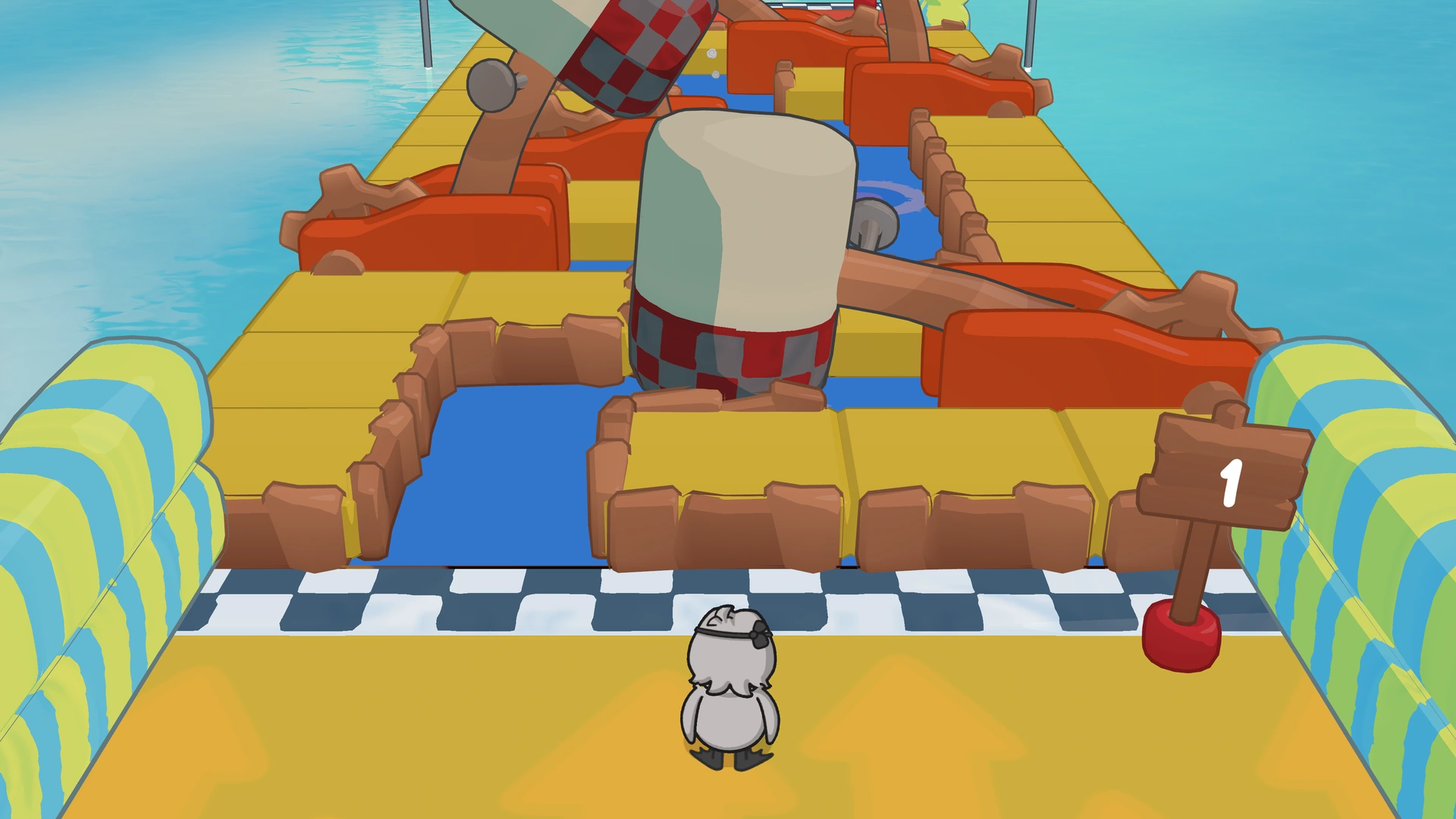
Available from Part 1. Pass through a corridor of walls and swinging hammers. The walls make you change lanes, and harder versions contain more sections.
- Check both the hammer’s swing and the path beyond it before passing. Move through after the hammer has cleared your route.
- Follow the blue channel between the yellow walls. Choose your next opening early so you do not run into a wall while concentrating on a hammer.
Swinging balls
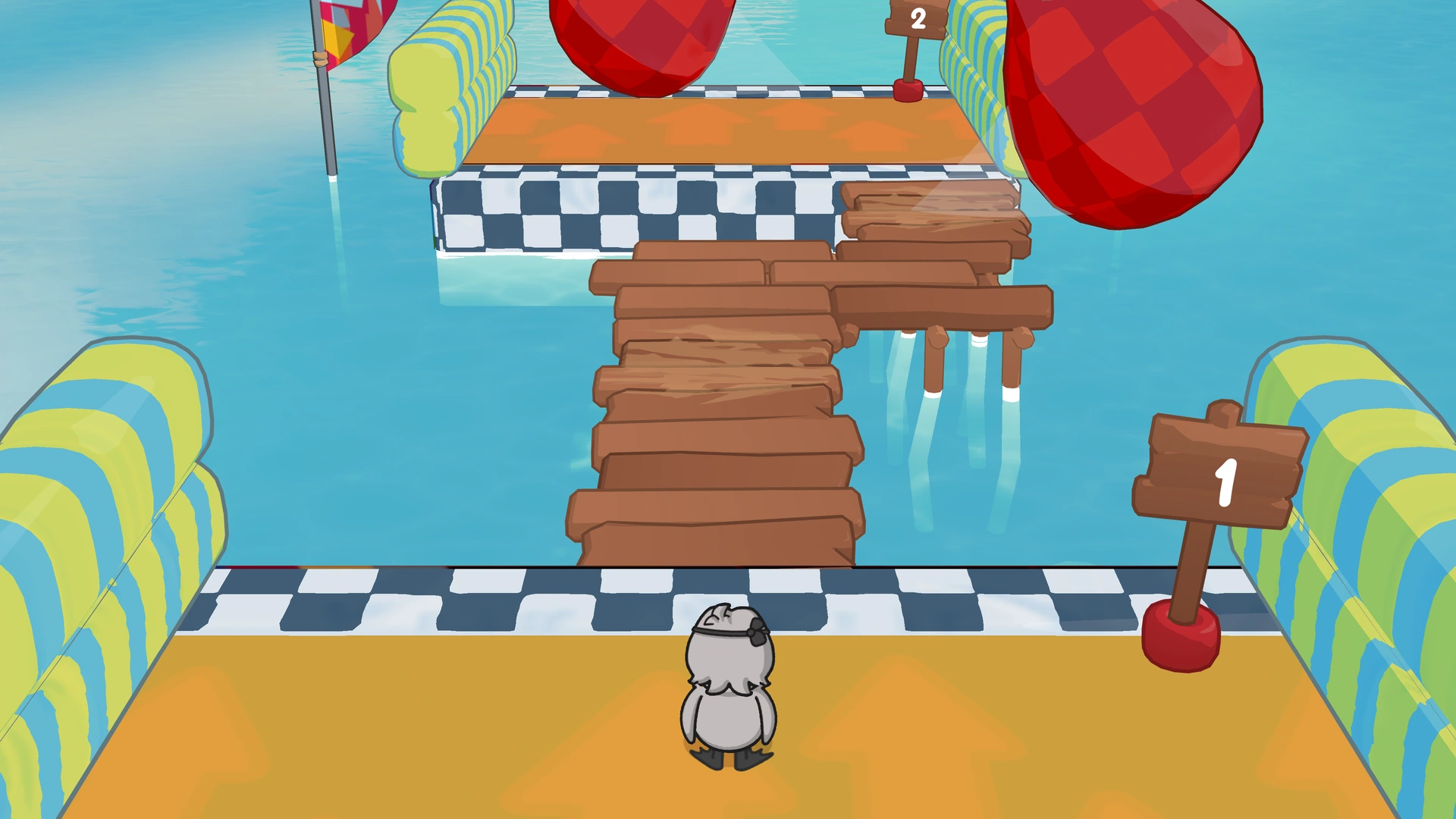
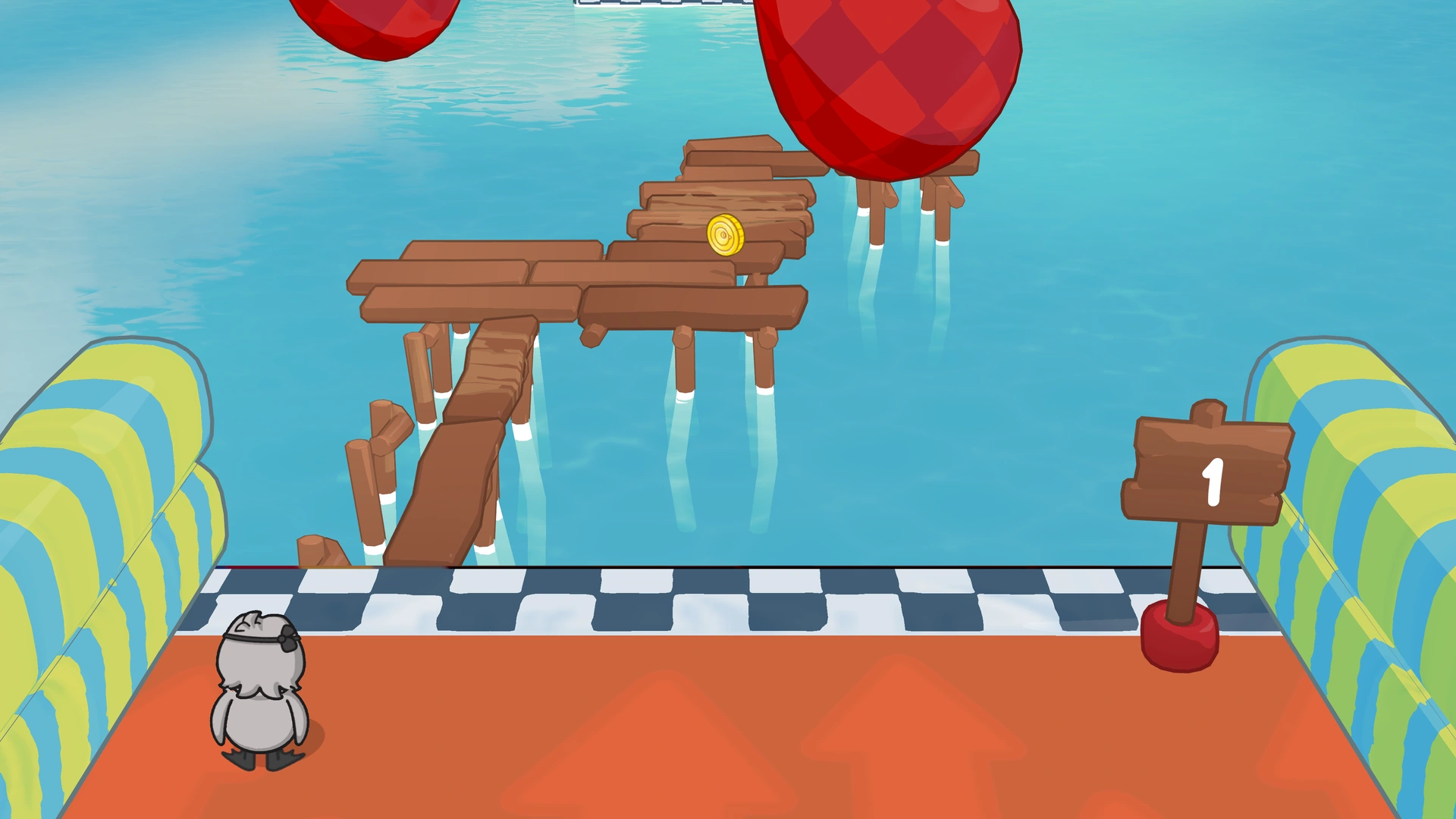
Available from Part 1. Pendulums swing across a wooden path. As difficulty rises, the path grows longer and can include narrow bridges, broken edges and single planks.
- Wait on a safe section and cross when the ball swings away from your route.
- Stay over the remaining planks on broken bridges. A clear gap between the pendulums is useful only if there is also a floor beneath it.
Rollers
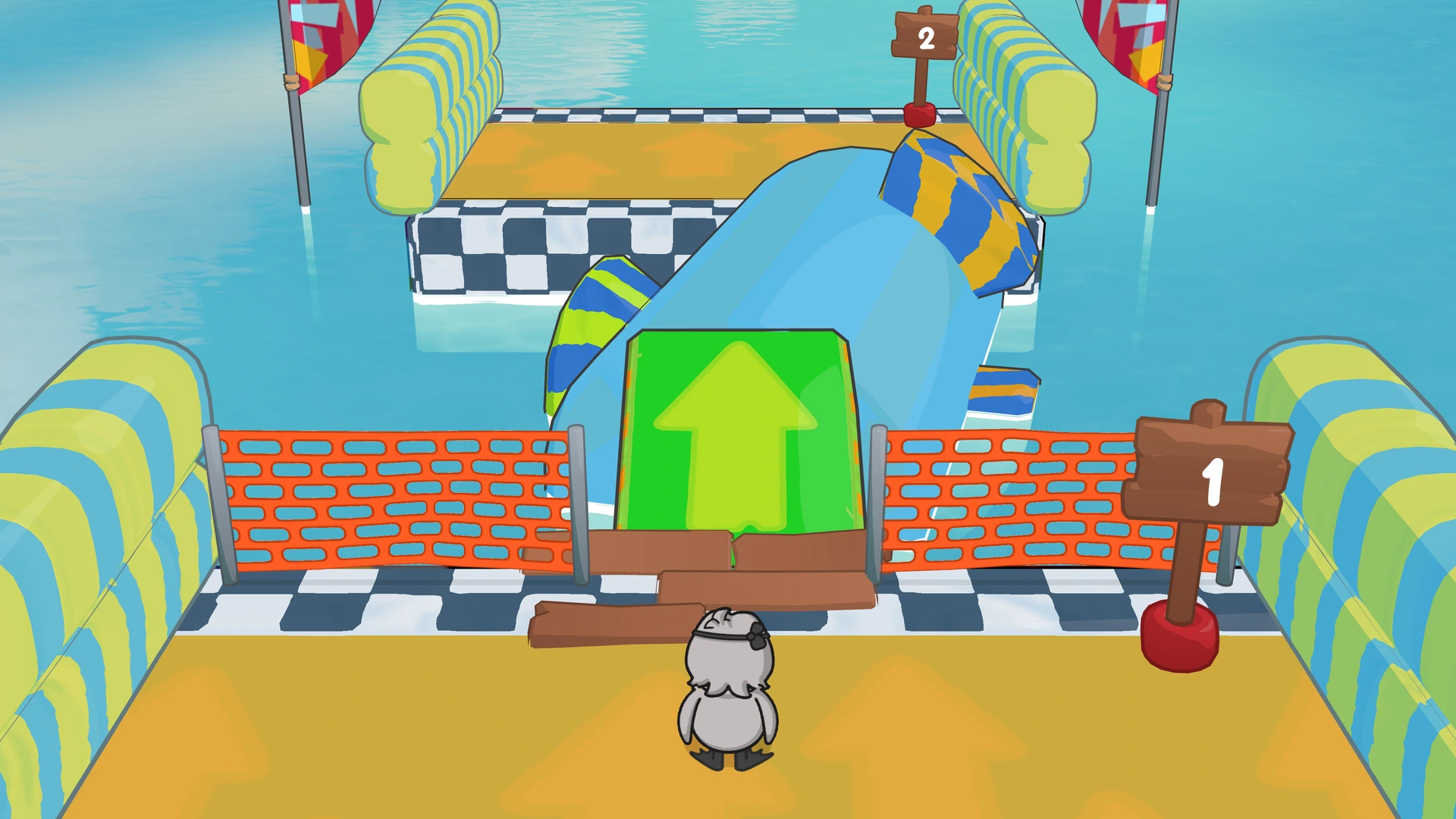
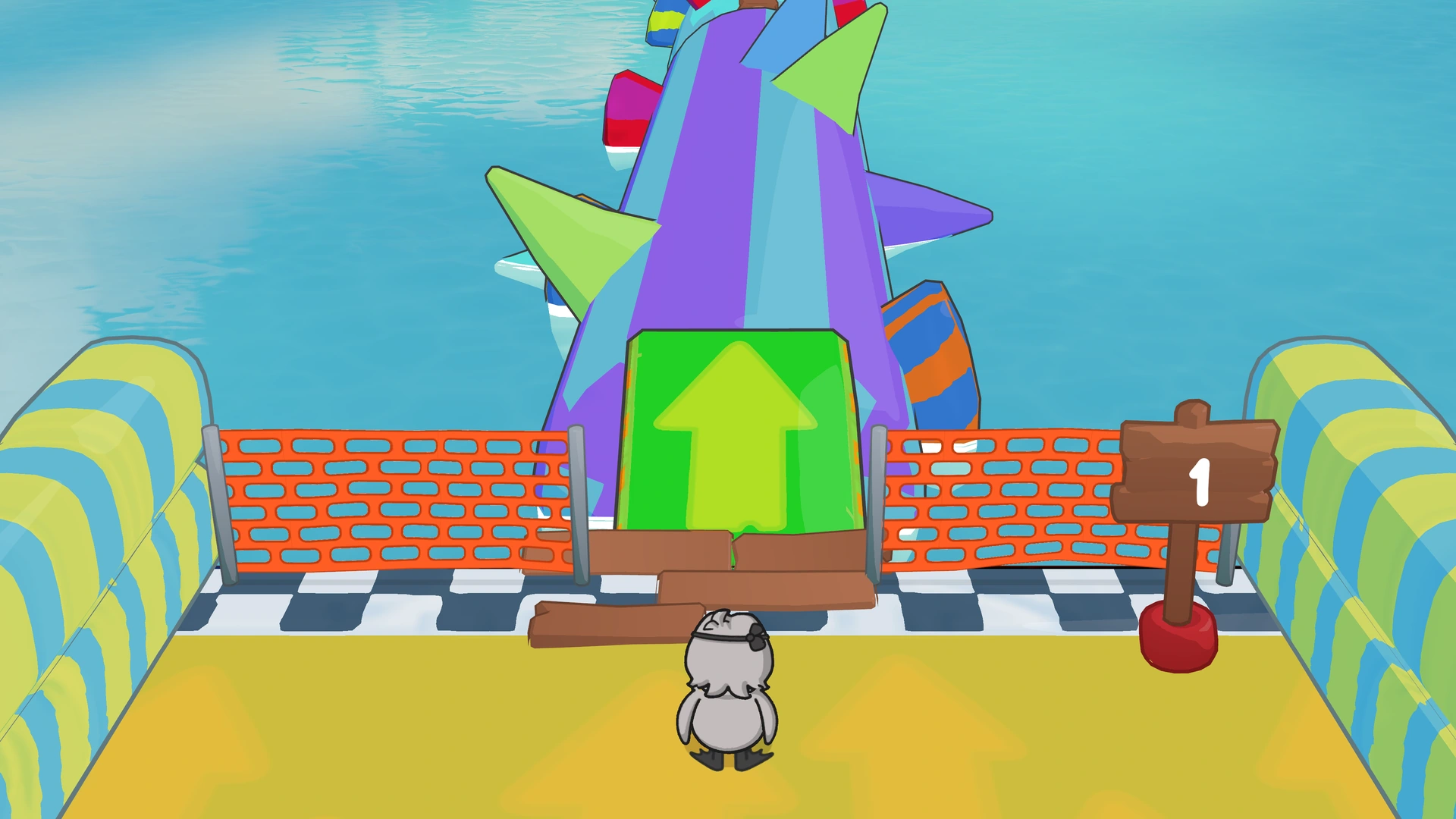
Available from Part 1. Cross long cylinders with rotating obstacles around them. Harder versions have longer runs, faster rotation and narrower connections between cylinders.
- Run around the protruding pegs as you cross the roller. Watch them coming around and move out of their path before they push you into the water.
- Line up with the connecting planks before leaving a cylinder; the next cylinder may be offset to one side.
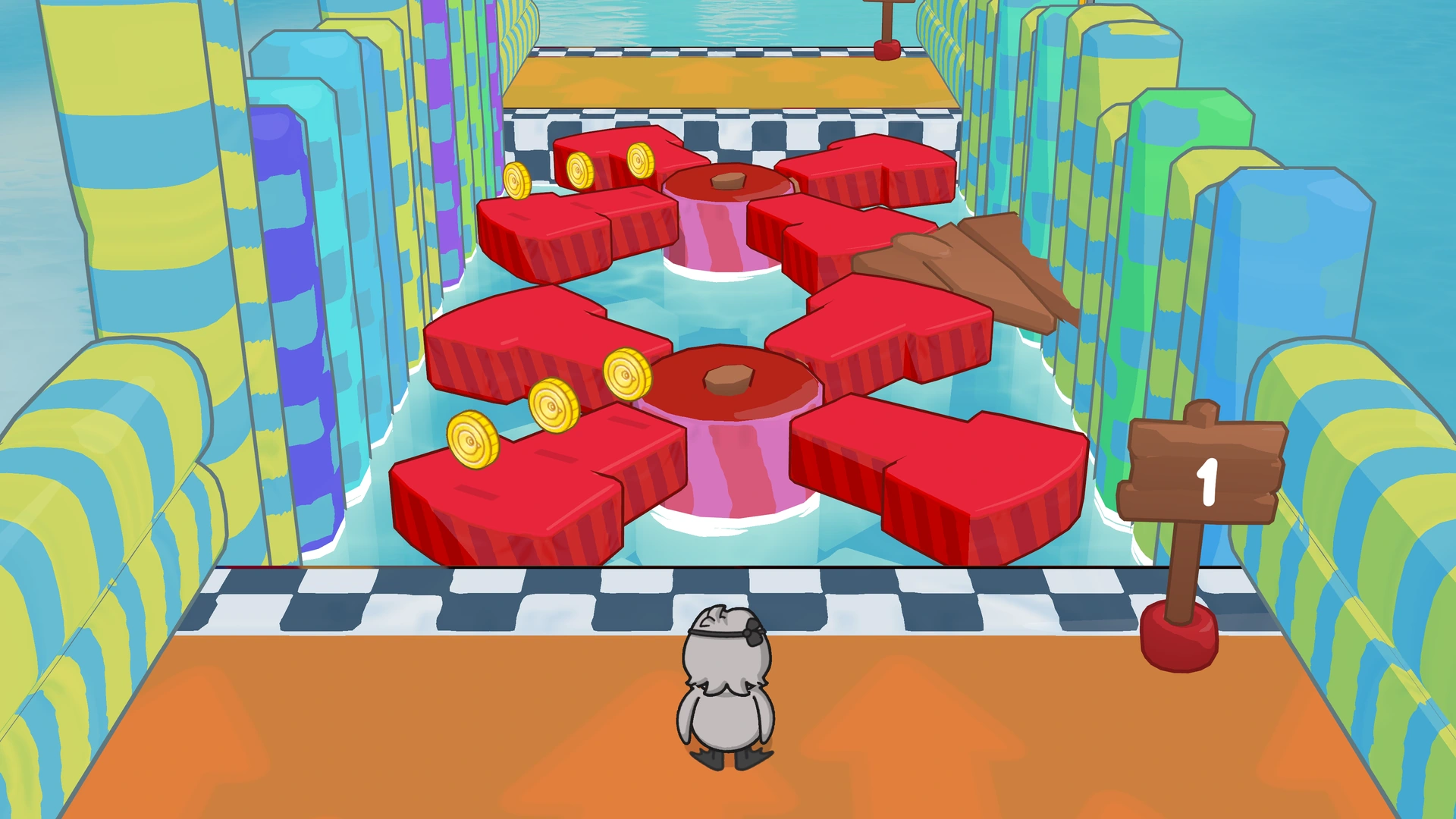
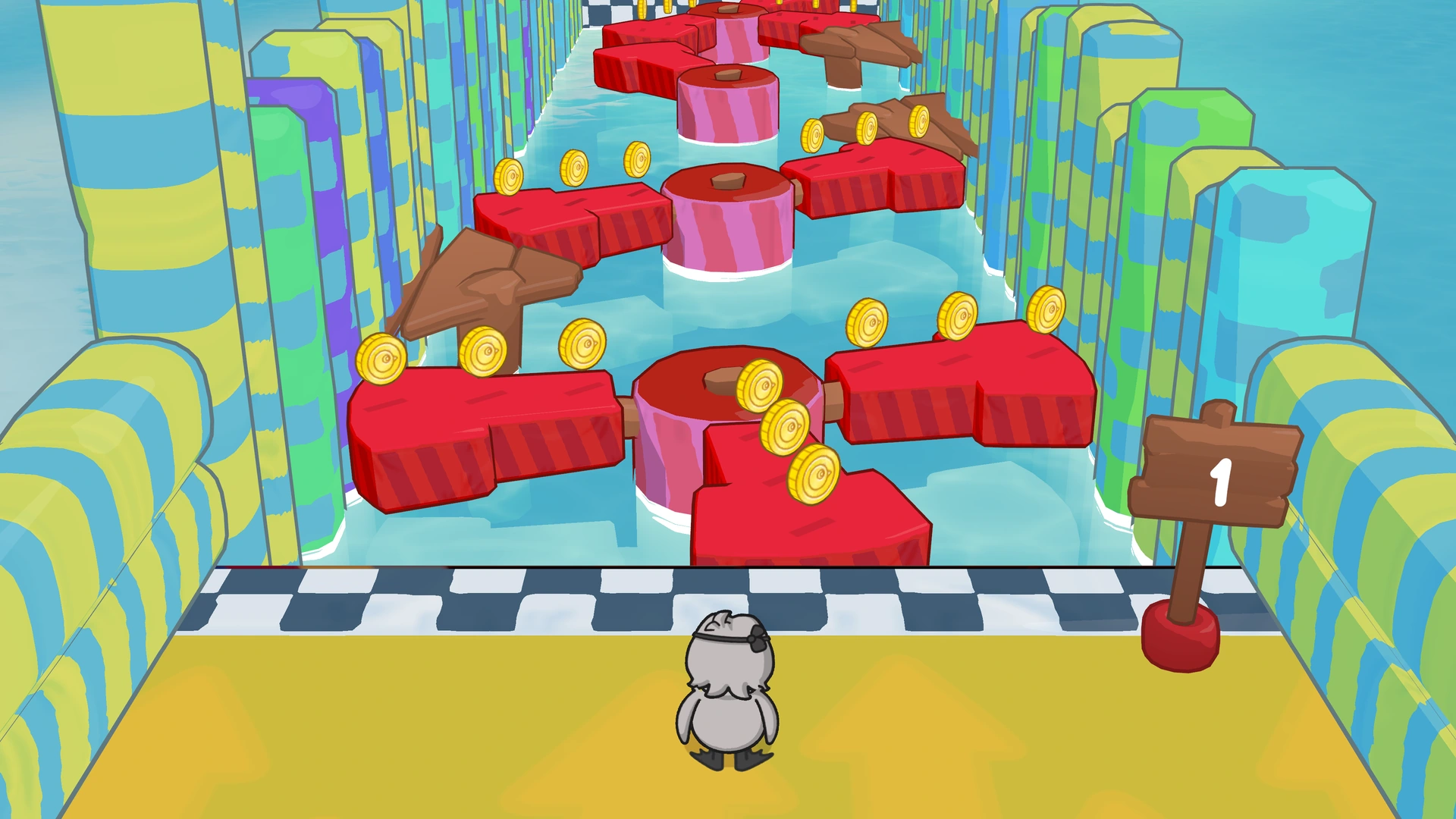
Rotating platforms
Available from Part 2. Cross spinning platforms with projecting arms and connecting bridges. Later versions can have fewer arms, faster rotation and more platforms to cross.
- Move towards the centre to give yourself room while deciding which arm leads to the exit.
- Watch the alignment with the next bridge. Move along the arm when it provides a safe route across, rather than running straight towards a gap.
Drifting platforms
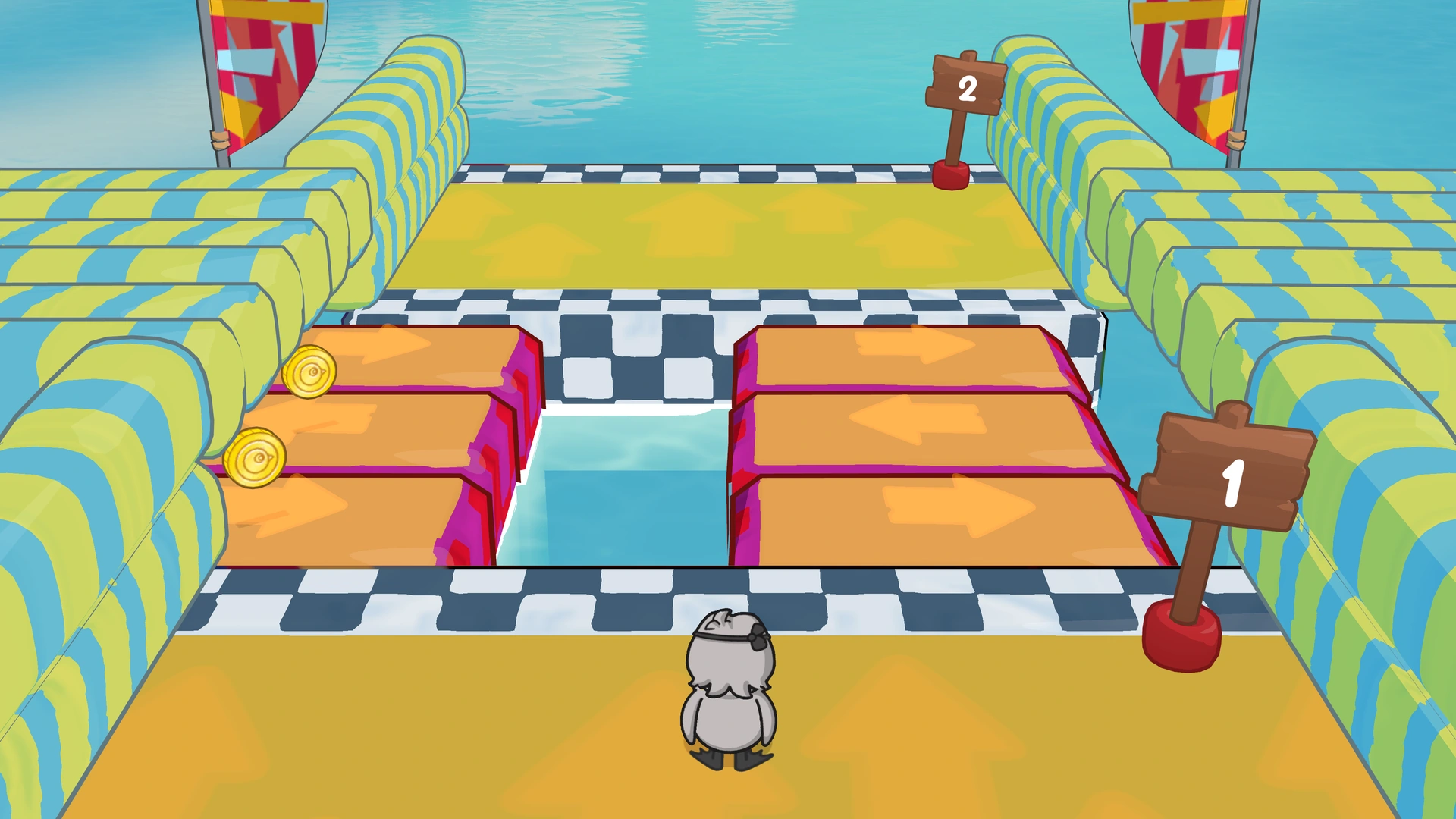
Available from Part 2. Rows of floating platforms travel sideways across the water, with neighbouring rows moving in opposite directions. They have orange tops and pink sides. Harder versions are longer, with narrower and faster platforms.
- Watch where the next row is moving and cross while a platform is in reach.
- Keep moving towards the next row instead of letting a platform carry you to the edge of the course. Use the occasional fixed bridge to line up again.
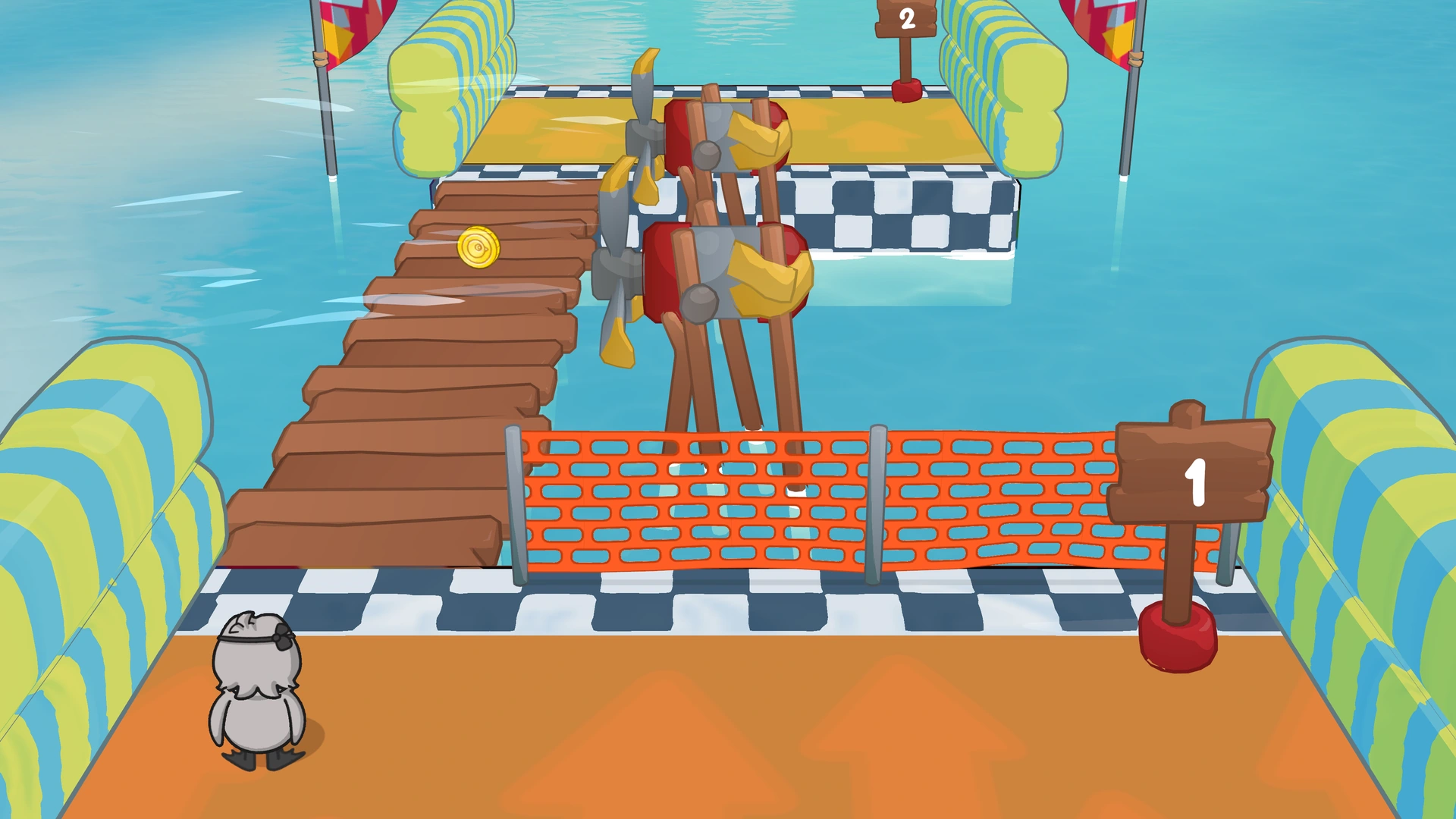
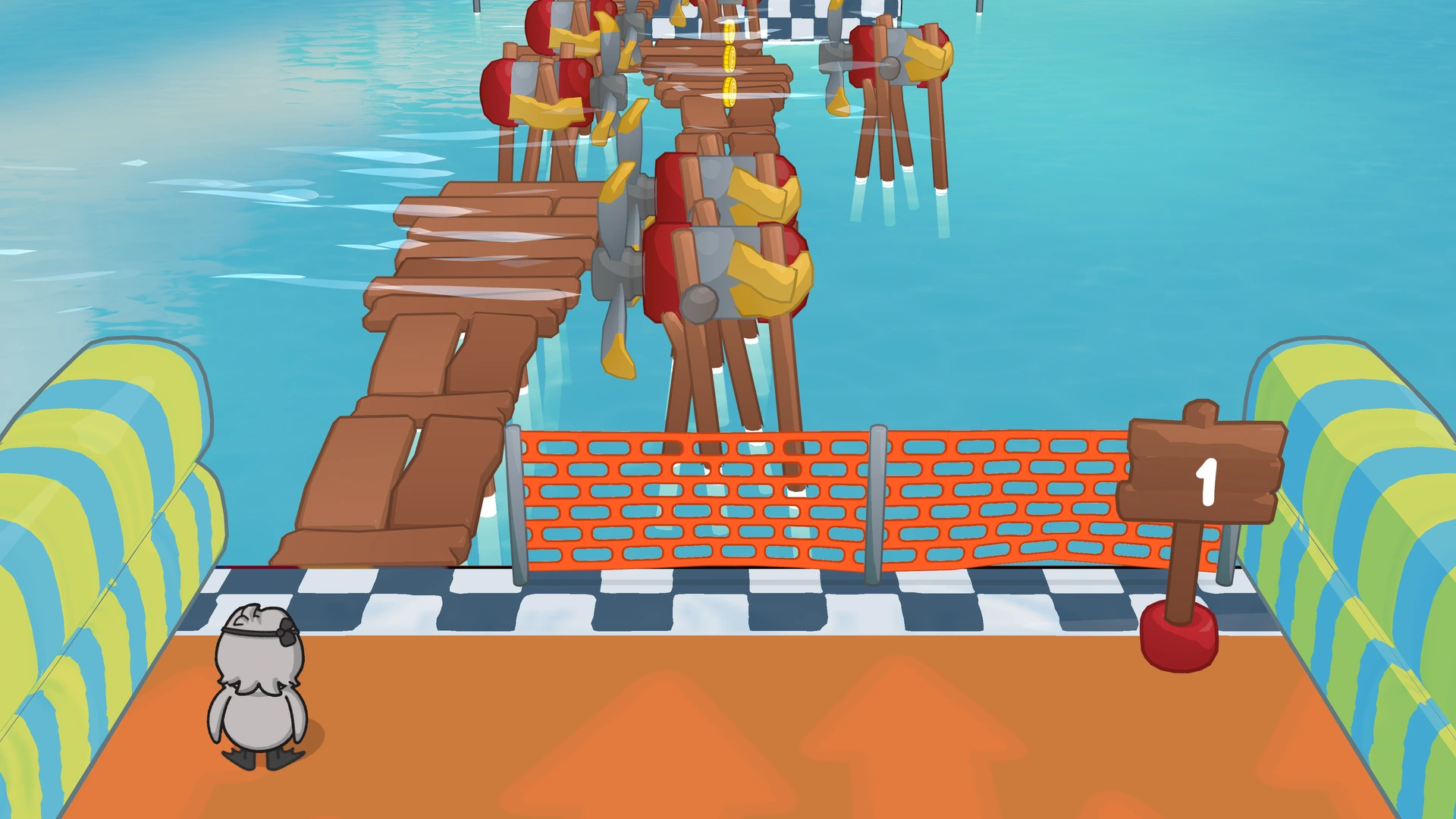
Fans
Available from Part 3. Fans blow sideways across a platform course. Later versions are longer and can include thinner bridges.
- Run against the sideways push of the wind to stay on the path. Check which way the fan is blowing before entering its airflow.
- Make small corrections towards the middle of the path; avoid overcorrecting towards the opposite edge.
Trapdoors
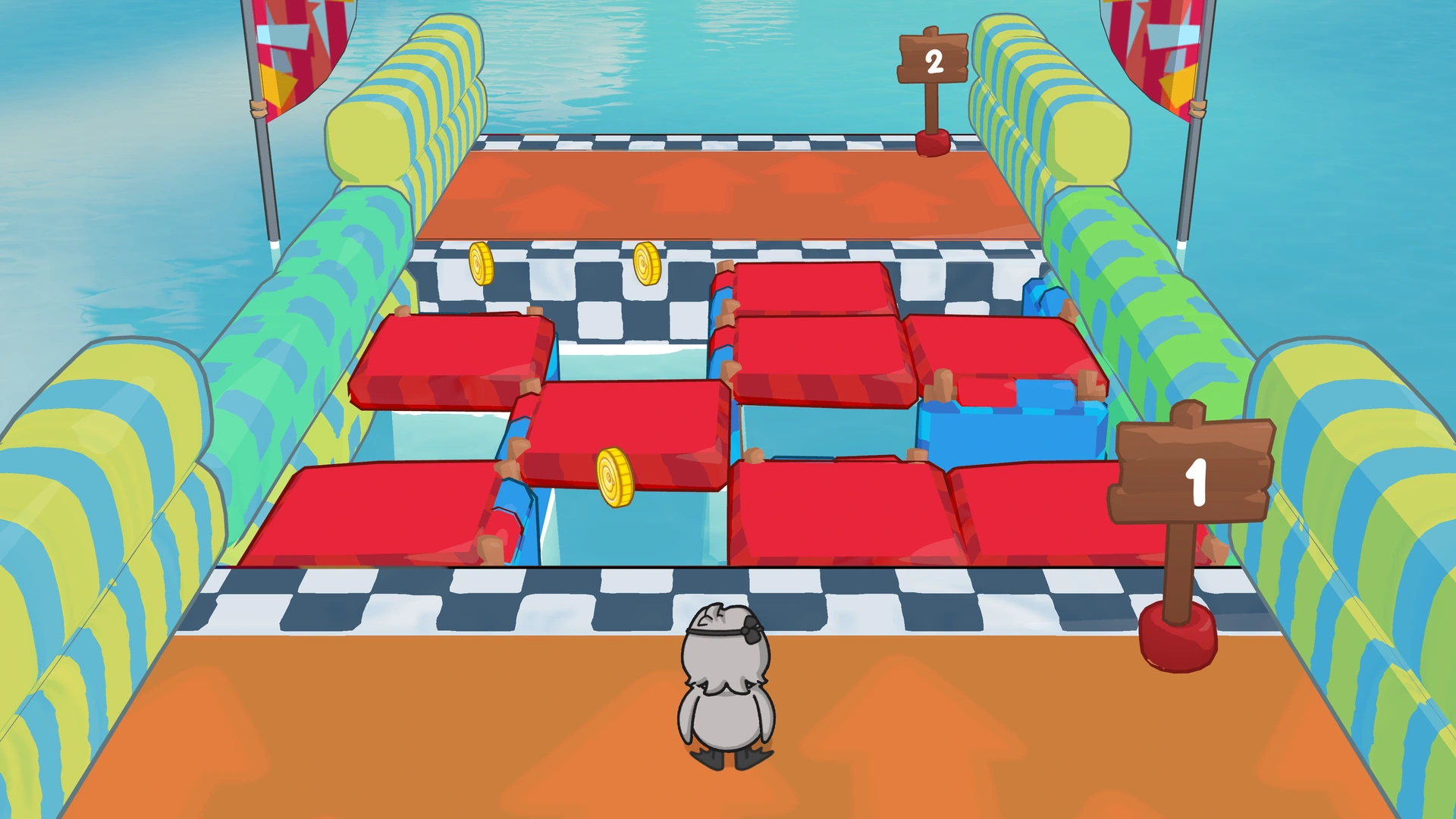
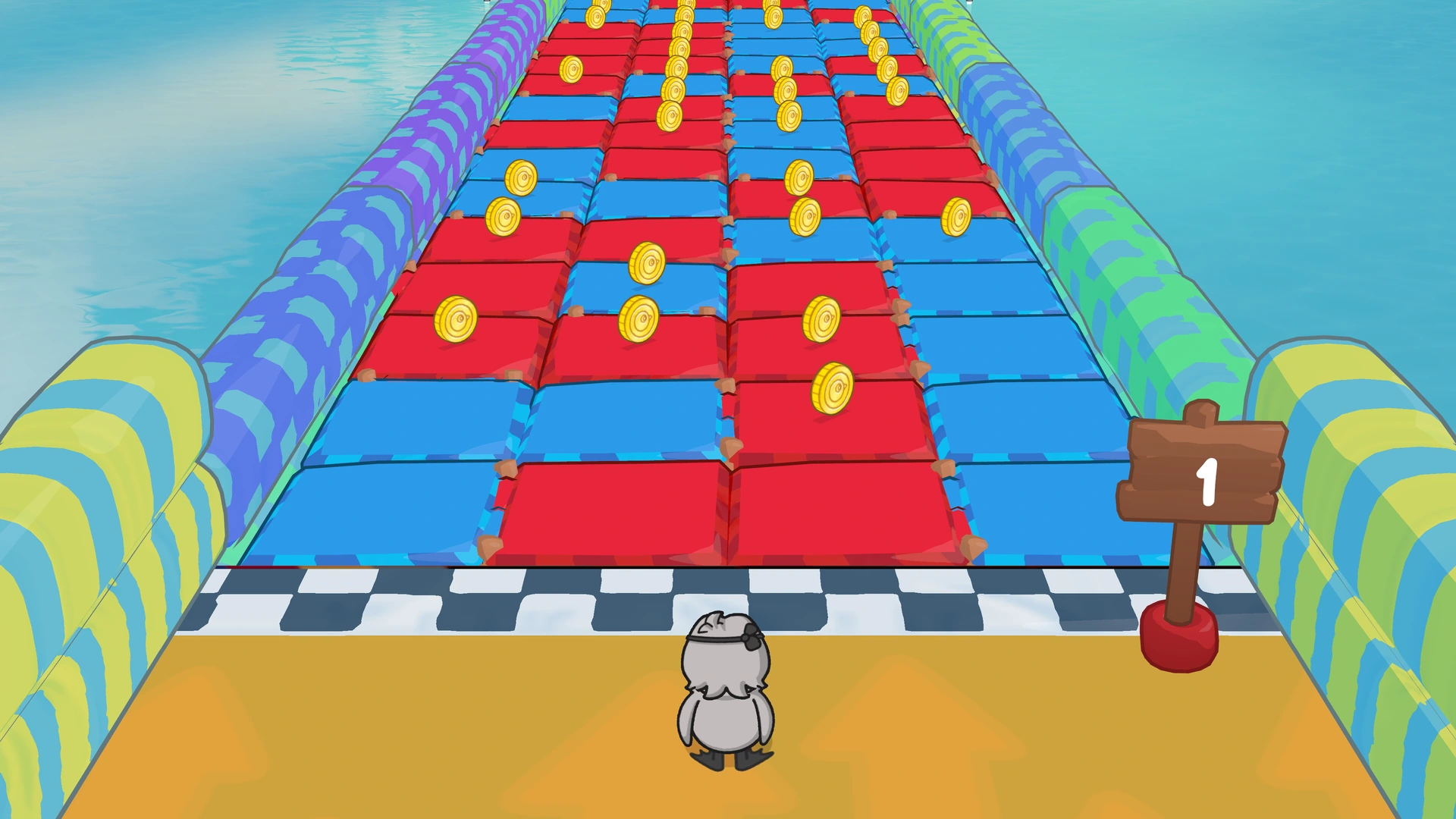
Available from Part 3. Cross a floor of red and blue trapdoors that repeatedly open and close. Harder versions contain more sections and cycle faster.
- Watch a full opening and closing cycle from solid ground before entering.
- Choose a route across closed, flat doors and keep checking the next door. Do not stop on a door that is about to open.
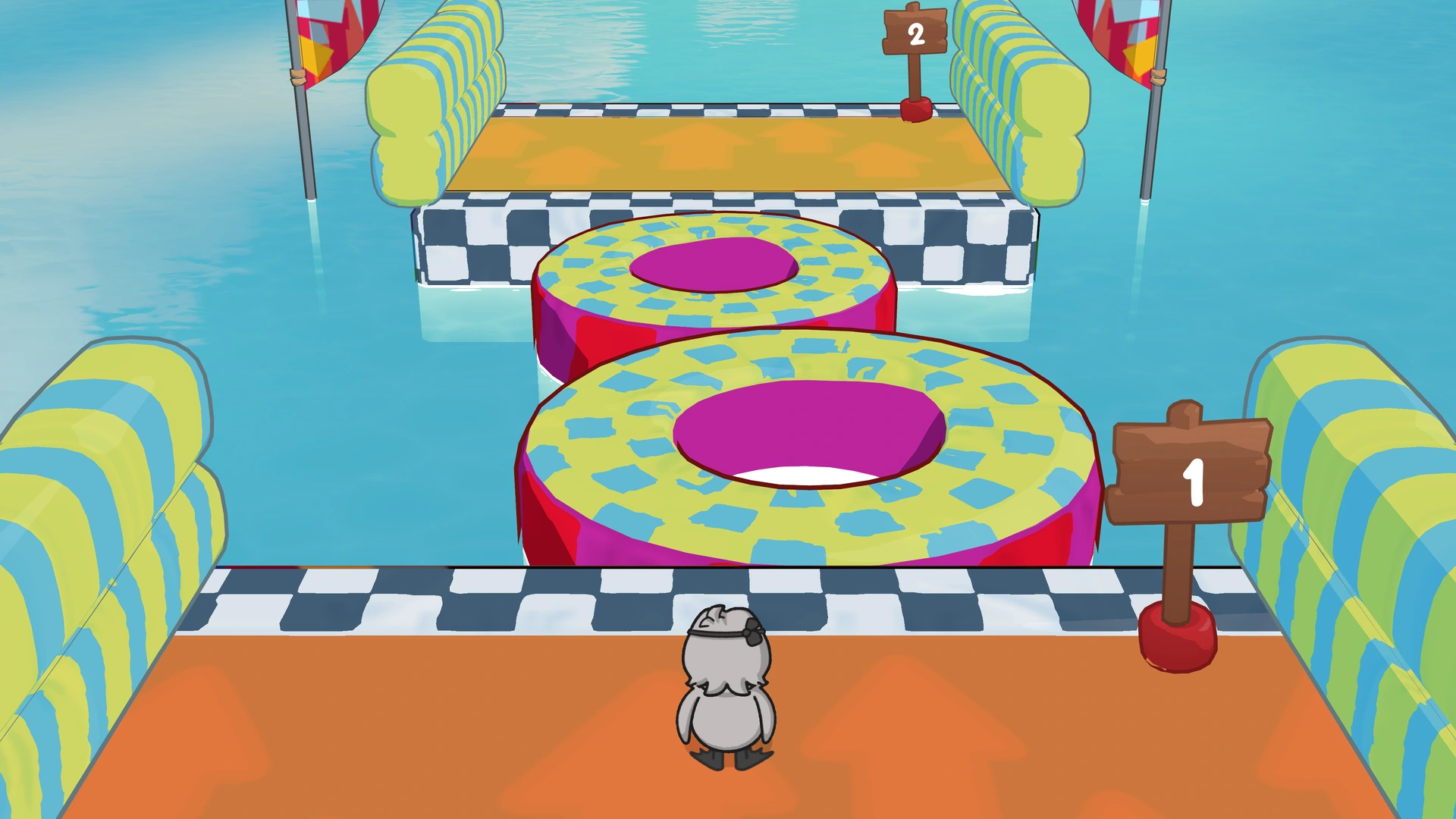
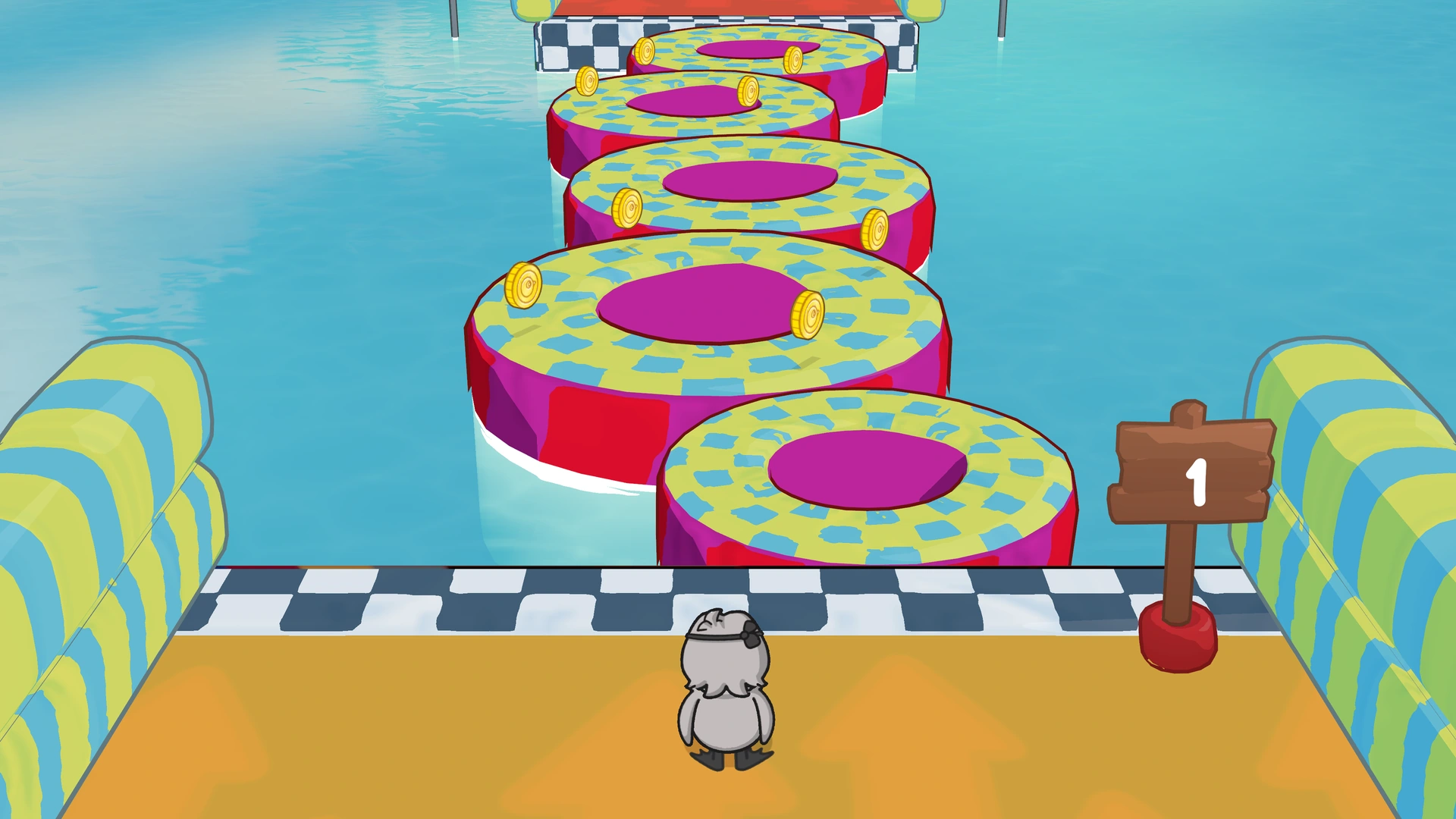
Rotating doughnuts
Available from Part 4. Cross ring-shaped platforms with an open centre. Neighbouring doughnuts rotate in opposite directions; harder versions add more rings and increase their rotation speed.
- Follow the ring around its centre hole rather than cutting straight through the middle.
- Plan where to transfer to the next ring. Its opposite rotation changes how the floor carries you as soon as you cross.
Shifting floor blocks
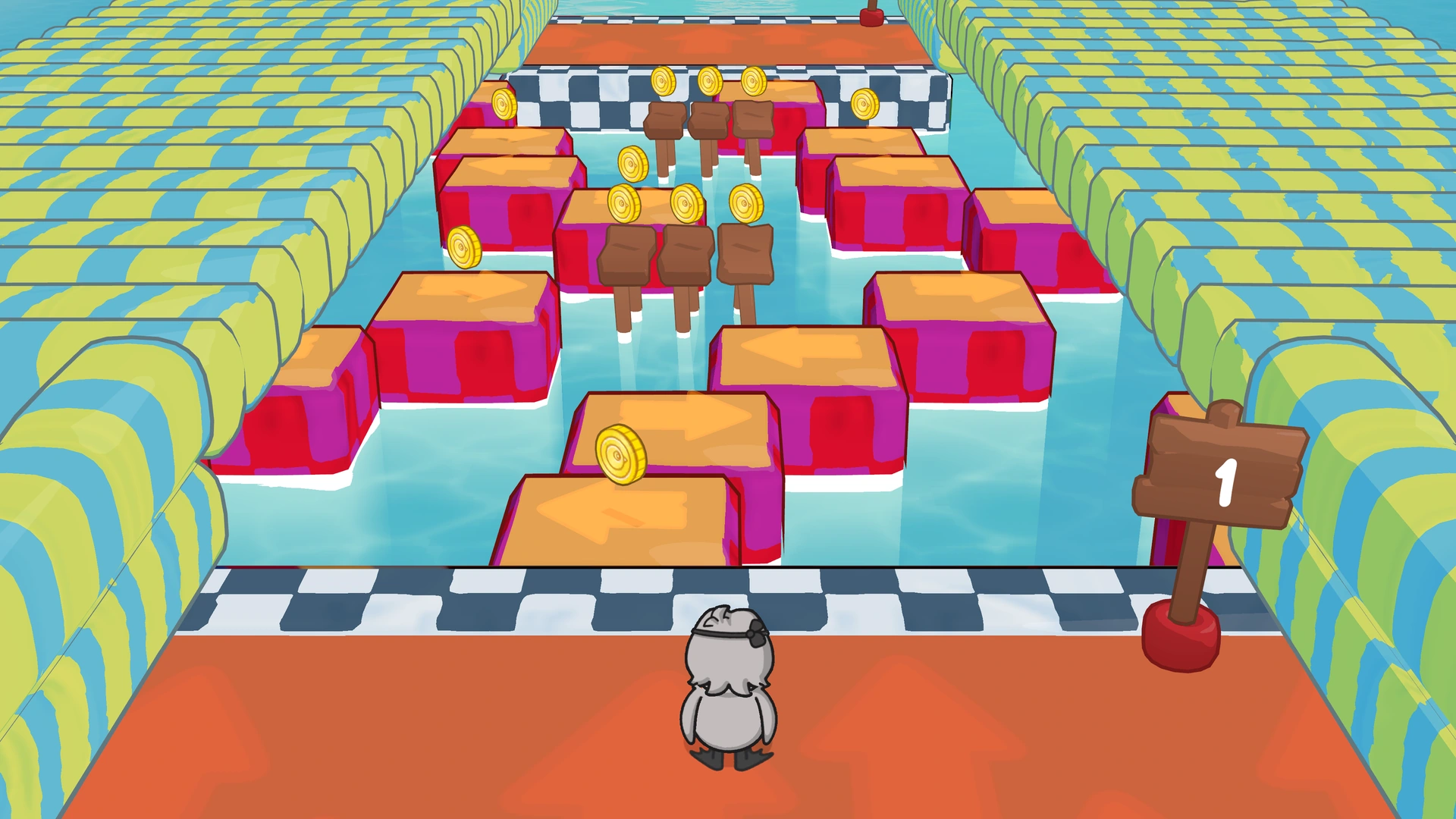
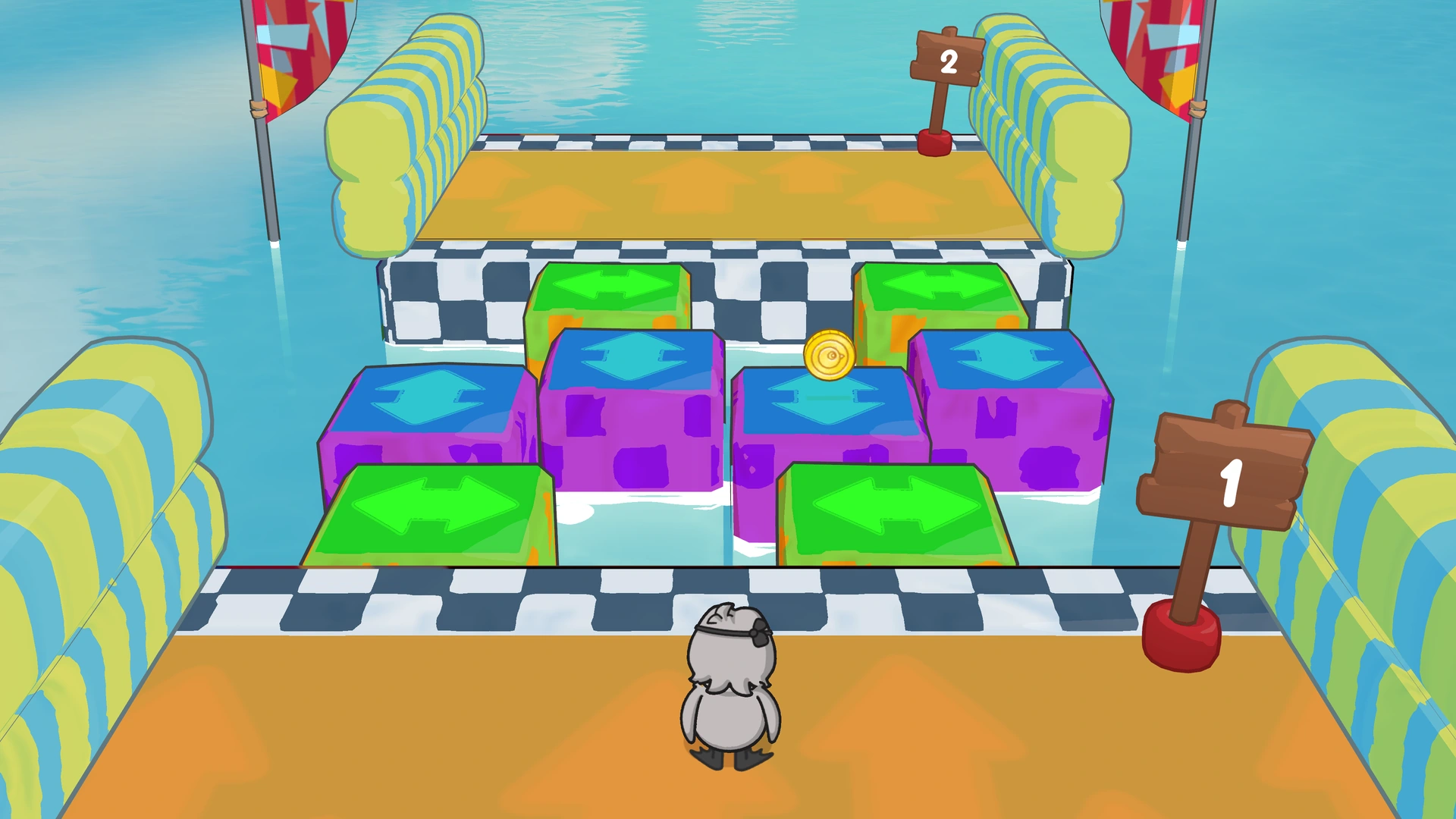
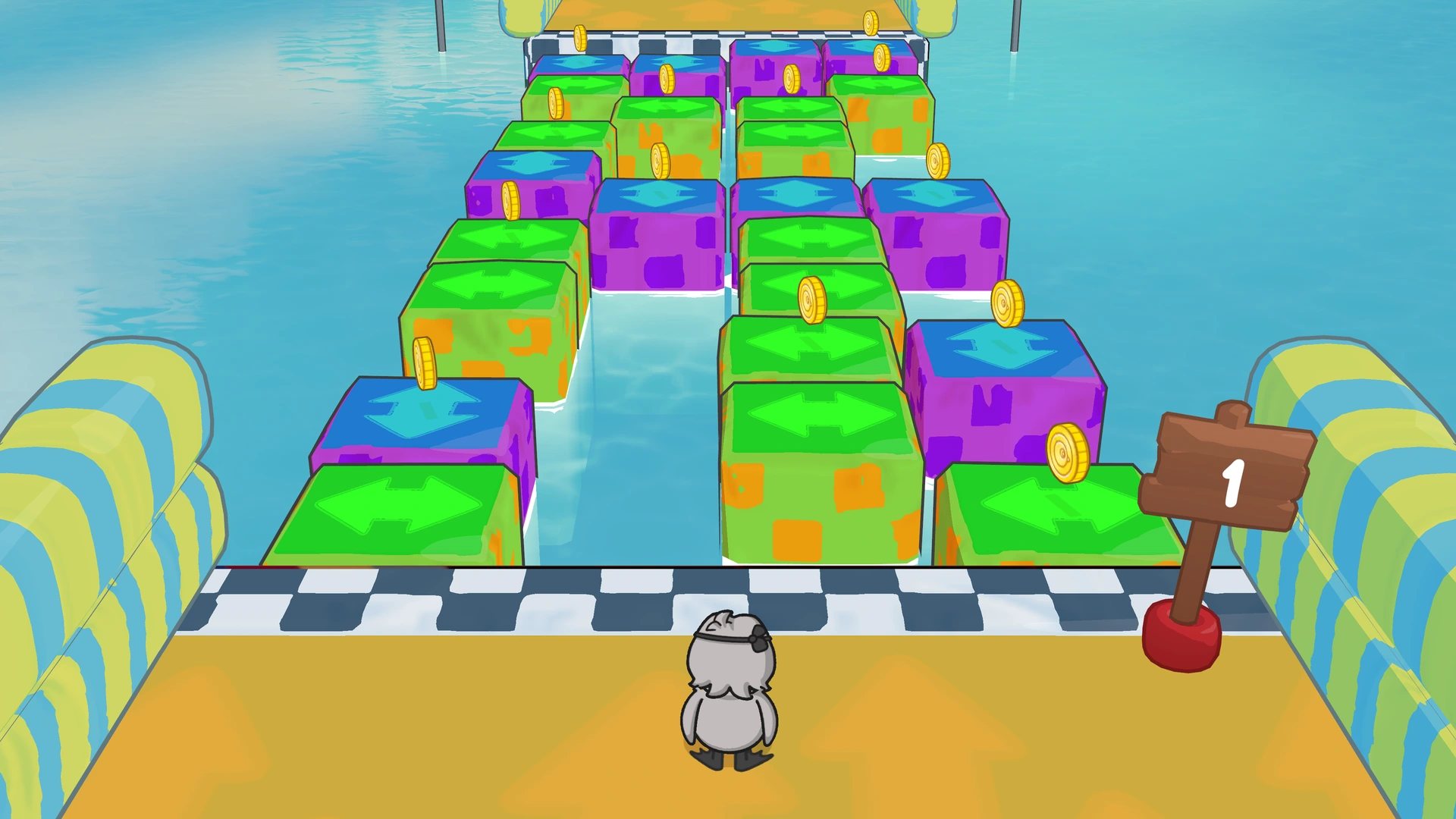
Available from Part 4. Square blocks slide back and forth, either sideways or along the course. Their movement continually changes where neighbouring blocks meet. Harder versions are longer and move faster.
- Watch the movement arrows and wait for neighbouring blocks to meet before crossing.
- Choose your next block before leaving the current one. Aim for where the block will be when you reach it.
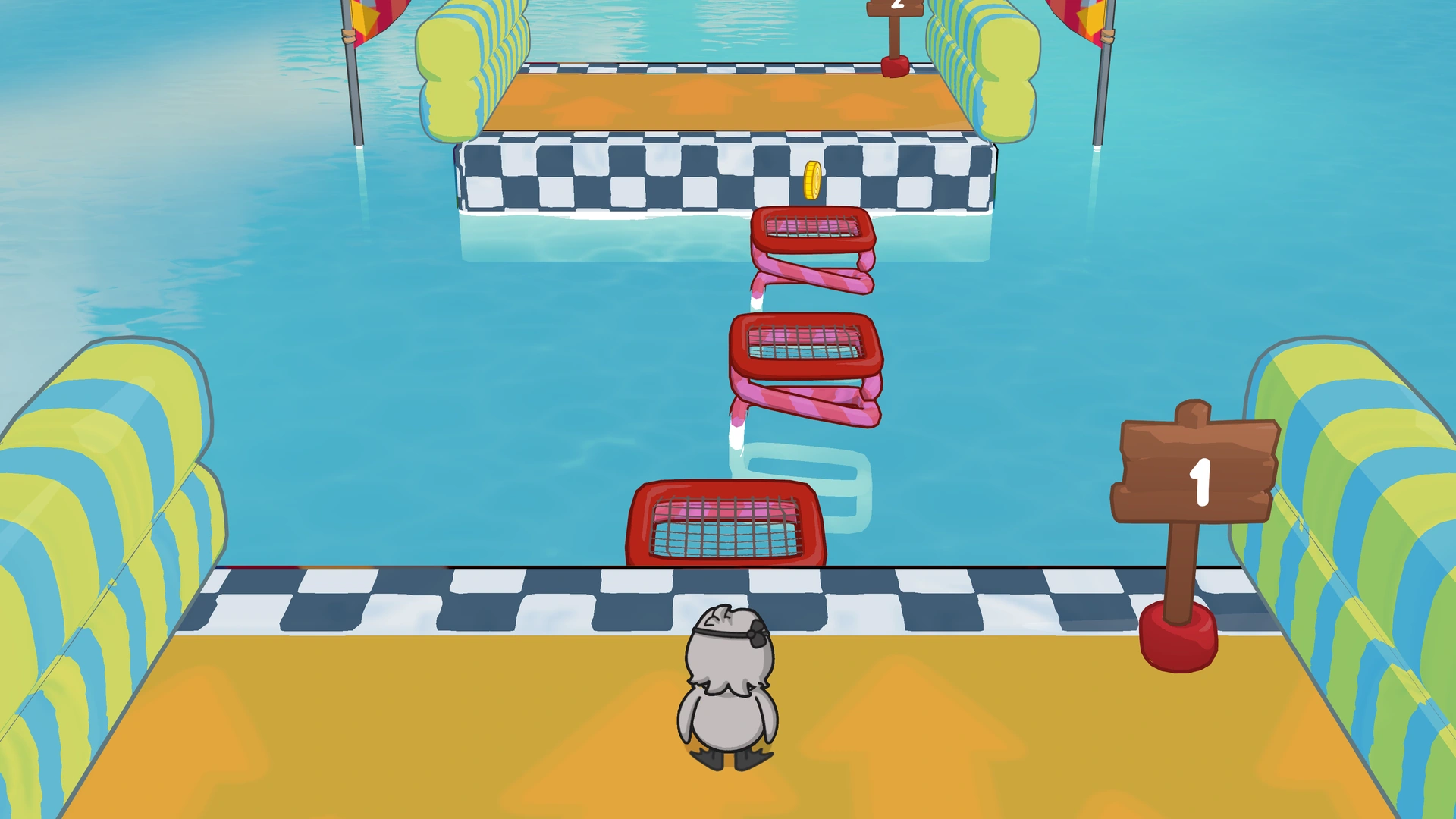
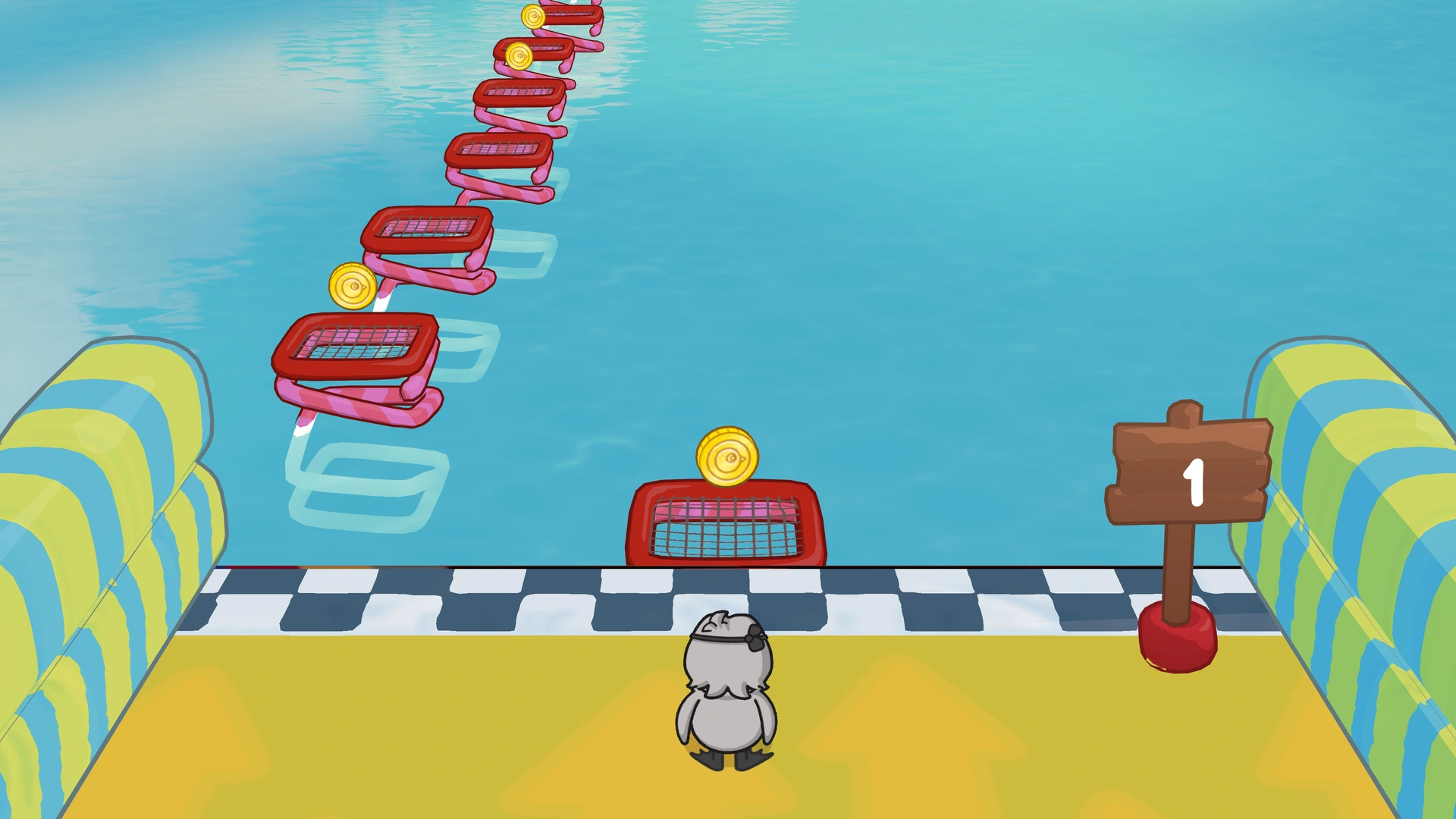
Trampolines
Available from Part 5. Landing on a trampoline automatically launches the duck into the air. Steer during the flight to reach the next trampoline. Harder versions have more trampolines, greater sideways offsets and more moving targets.
- Look for the next trampoline as soon as you bounce, then steer towards its landing area.
- If it is moving sideways, aim for where it will be when you come down. Keep correcting your approach while airborne.
Tips and tricks
- Use the connecting platforms to read the next obstacle and line up your approach.
- Prioritise a safe route over a coin near an edge. Staying on the course lets you reach the next XP checkpoint.
- Learn how each obstacle moves, then practise crossing it without unnecessary stops. The same obstacle can have a much harder layout later in the run.
Training progress
Practise to raise  Running. Beginner training stops at 50; unlock Pro training at the Centre to go further. Select the duck you want to train before starting.